In many cases, party walls are not as exciting as they sound, but understanding them is crucial for smooth building projects and avoiding disputes. Here’s everything you need to know about party walls and agreements.
What is a party wall?
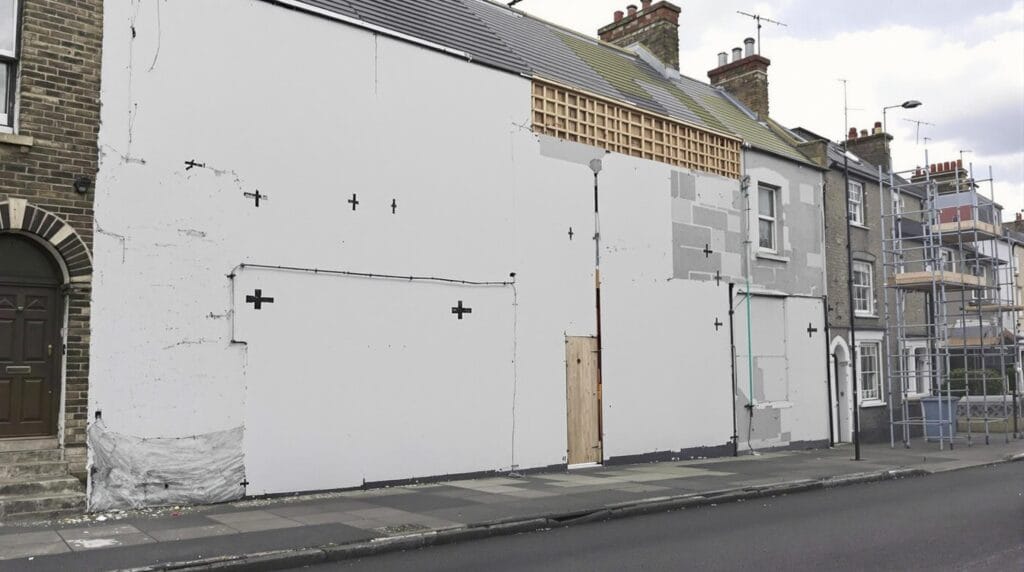
A party wall is a shared structure that rests on the boundary between two (or sometimes more) different property owners. Common examples include:
- Walls separating terraced or semi-detached houses.
- Garden boundary walls (referred to as party fence walls).
Understanding these shared walls is vital when considering renovations or structural changes.
The Party Wall Act (1996)
The Party Wall Act 1996 was established to ensure that building work does not compromise the structural integrity of shared or adjoining properties. The Act helps prevent disputes between neighbours and provides a legal framework to resolve them.
This legislation applies to England and Wales, and it outlines the rights and responsibilities of property owners before and during construction work on or near a party wall.
What is a party wall agreement?
If you plan on carrying out any building work near or directly on a party wall, you may need a Party Wall Agreement. This legal document ensures that your neighbours are informed of your plans and helps mitigate possible disputes. To initiate this, you’ll need to issue a Party Wall Notice and work on a written agreement with your neighbours.
Common situations that could require a party wall agreement:
- Modifications to shared walls between semi-detached or terraced homes.
- Structural work involving shared floors in flats or apartments.
- Alterations to garden boundary walls.
- Excavations or underpinning that occurs within 3 to 6 meters of a party wall.
- Building a second-storey extension on or close to a shared wall.
- Loft conversions that involve cutting into a party wall.
- Inserting damp-proof courses into party walls.
- Increasing the thickness or height of party walls.
- Constructing a new wall up to or adjoining an existing party wall.
Serving a Party Wall Notice
A Party Wall Notice informs your neighbours about your planned works. Here are the key points to remember:
- Notices should be served between two months to one year before starting the work.
- If neighbours do not consent or fail to respond within 14 days, the matter may escalate into a dispute.
- In the case of disputes, a party wall surveyor will be needed. Both parties can agree on a single surveyor, or each may appoint their own.
The surveyor will draft a Party Wall Award, a legally binding document specifying the details of the work, timelines, and responsibilities, including cost allocation. This ensures that all parties are on the same page and helps avoid conflicts during the project.
Why work with experts?
Navigating the legal and technicalities of the Party Wall Act can feel overwhelming. Whether you’re planning a loft conversion, extension, or any significant renovations, engaging with experts like CGA Design & Build can make the process seamless. We bring expertise in residential design and construction, backed by our 5-star Google reviews.
Our team is well-versed in managing party walls, ensuring that your project complies with the law while maintaining strong neighbourly relations. Contact us today to discuss your project, and let us handle the complexities for you.
Remember, addressing party wall matters early ensures a smoother journey for your construction plans. Don’t delay-get professional advice from experienced design and build specialists like CGA Design & Build.
If you are weighing up options for your home, our residential design services can help compare layouts, planning routes and buildability before committing to detailed drawings or a design and build route.